Why Calorie Counting Leaves You Hungry — and How to Lose Weight Without Doing It
Your stomach doesn't count calories — it measures space. Here's how calorie density lets you feel full, lose weight, and never track another number.
By Deborah Tenenbaum, NP · August 26, 2026
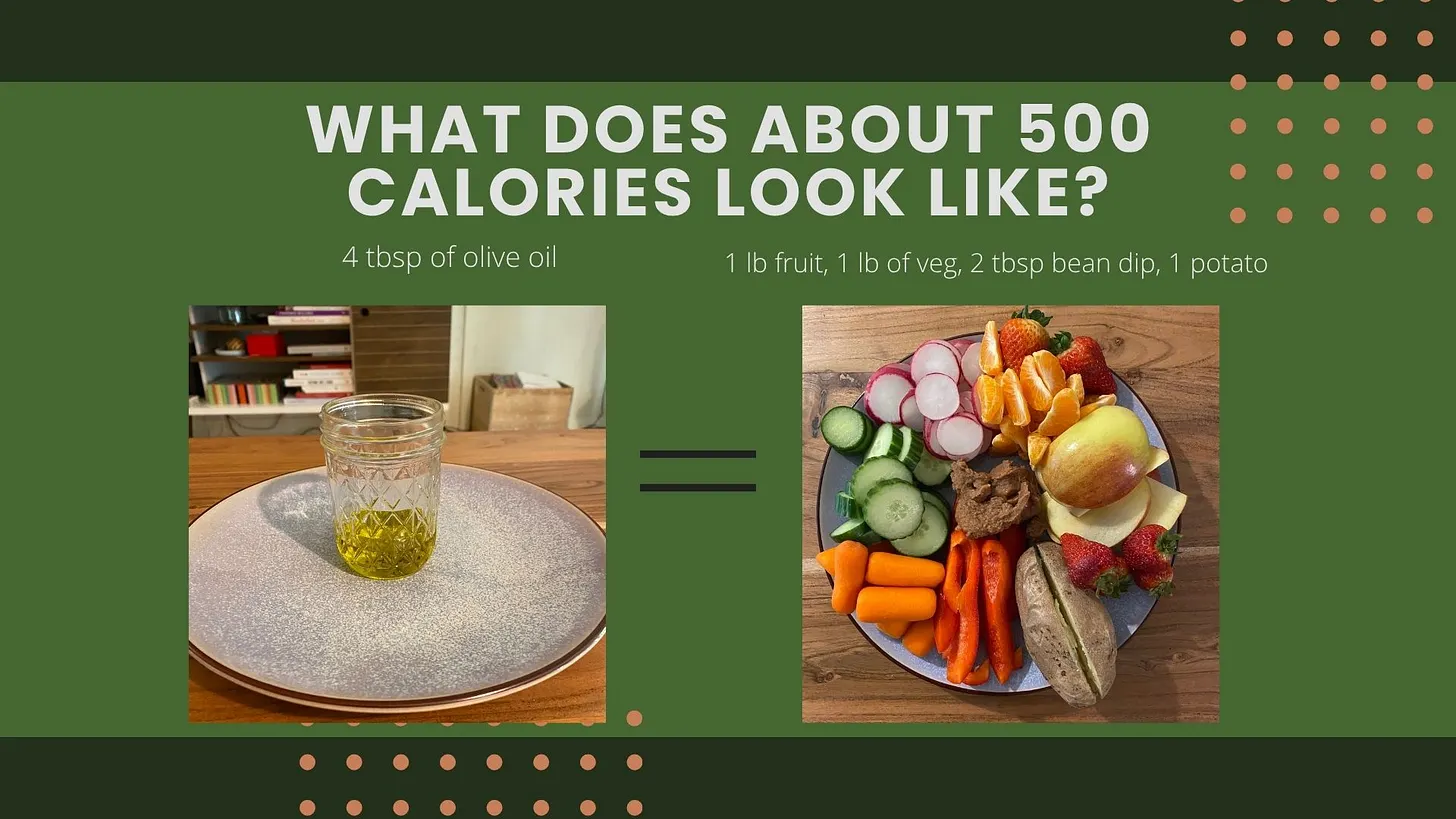
I HATE counting calories. Tracking can be useful — I'm not arguing it isn't — but every time I've tried it I've quit by lunch, already over 2,000 calories and still hungry.
Then I watched Jeff Novick's lecture on calorie density and never looked back. It's long and a little dated, but worth the time. Here's the concept.
Why your stomach doesn't care about calories
Your stomach doesn't count calories. It measures space.
Your stomach has stretch receptors — little sensors in the wall that fire when it's full. They don't care how many calories are in there. They care how much room you've taken up. To feel full, you have to fill the space.
The problem: some foods pack a ton of calories into almost no space. Others take up a lot of space for very few calories. The standard American diet is full of the first kind, which is exactly why you can finish a bag of chips, hit 800 calories, and still be hungry an hour later. Eat 800 calories of whole plant foods and you'll stay full for hours.
This is much easier to understand with visuals. Here is a good one from Forks Over Knives:
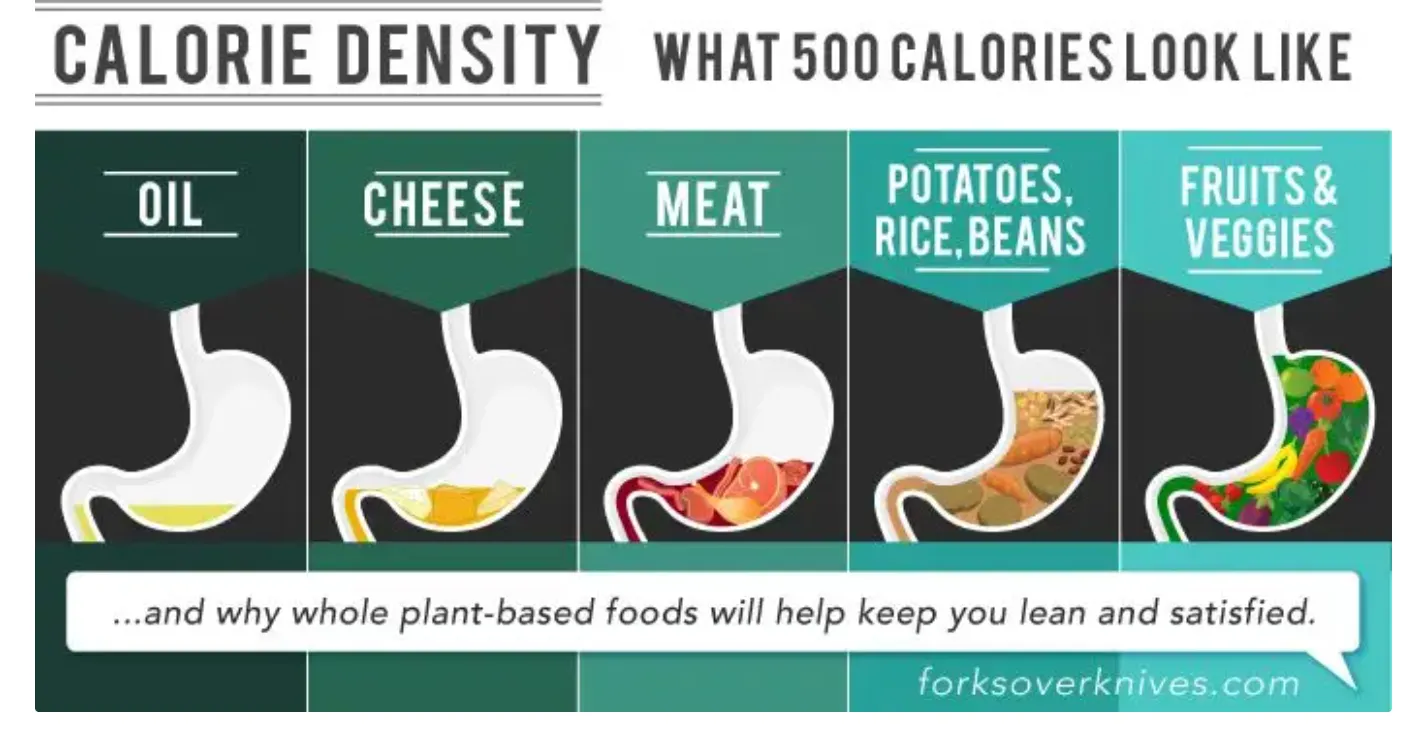
Volume keeps you full, not the number of calories
This infographic from the American College of Lifestyle Medicine does a good job showing how many calories a specific food contains per pound of that food.
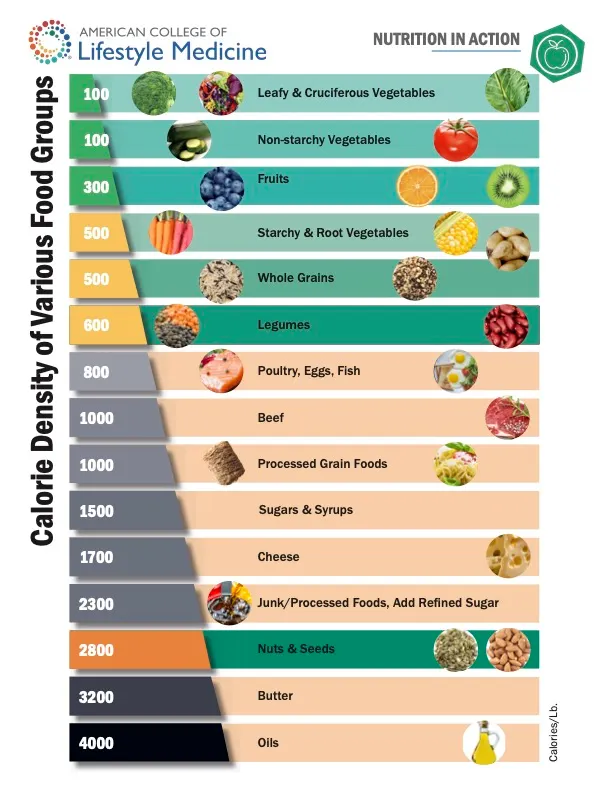
It's genuinely hard to overeat beans, potatoes, squash, rice, oats, fruit, and veggies. Pile your plate.
What 500 calories actually looks like
Trap 1: Nuts and seeds
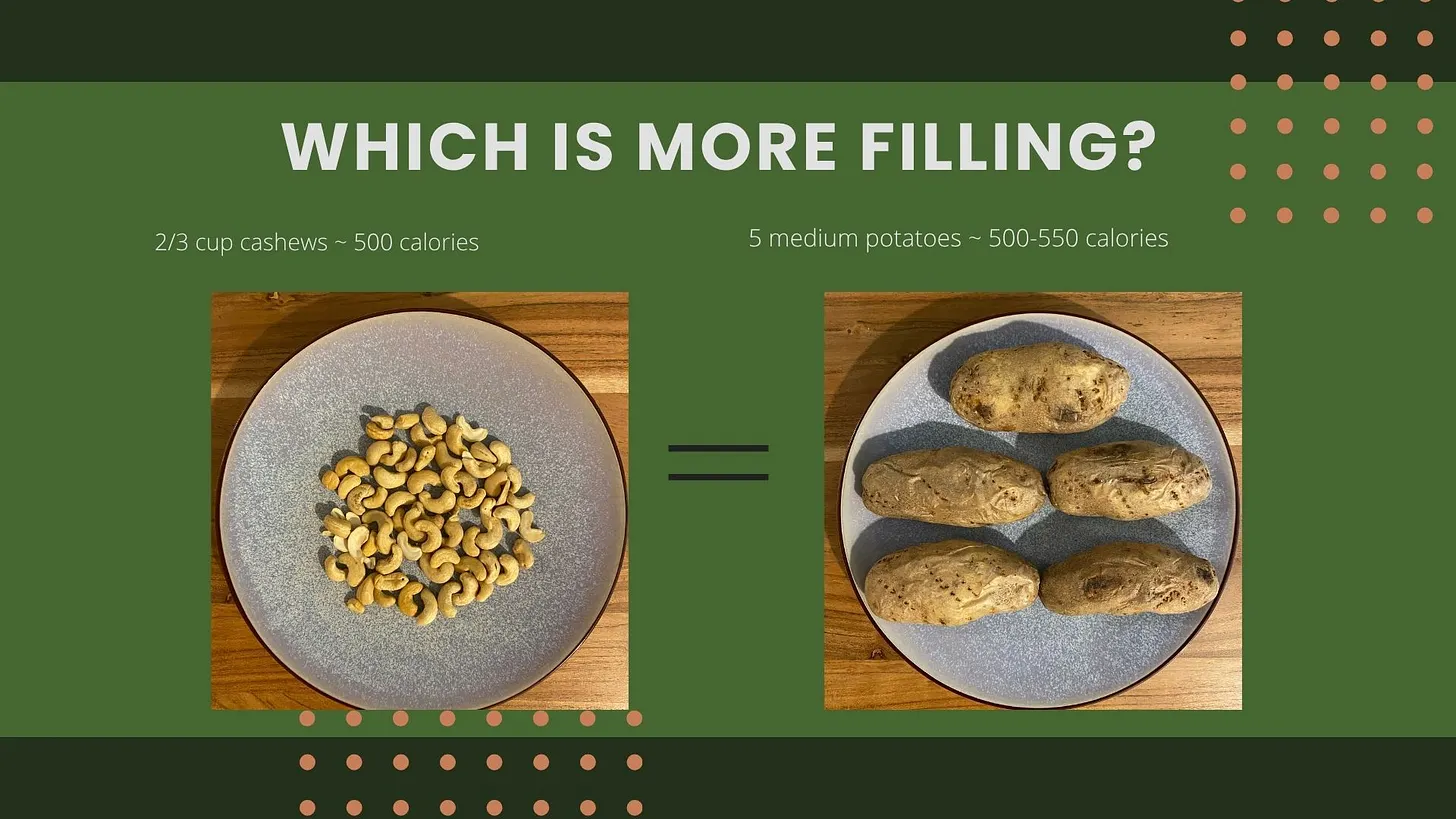
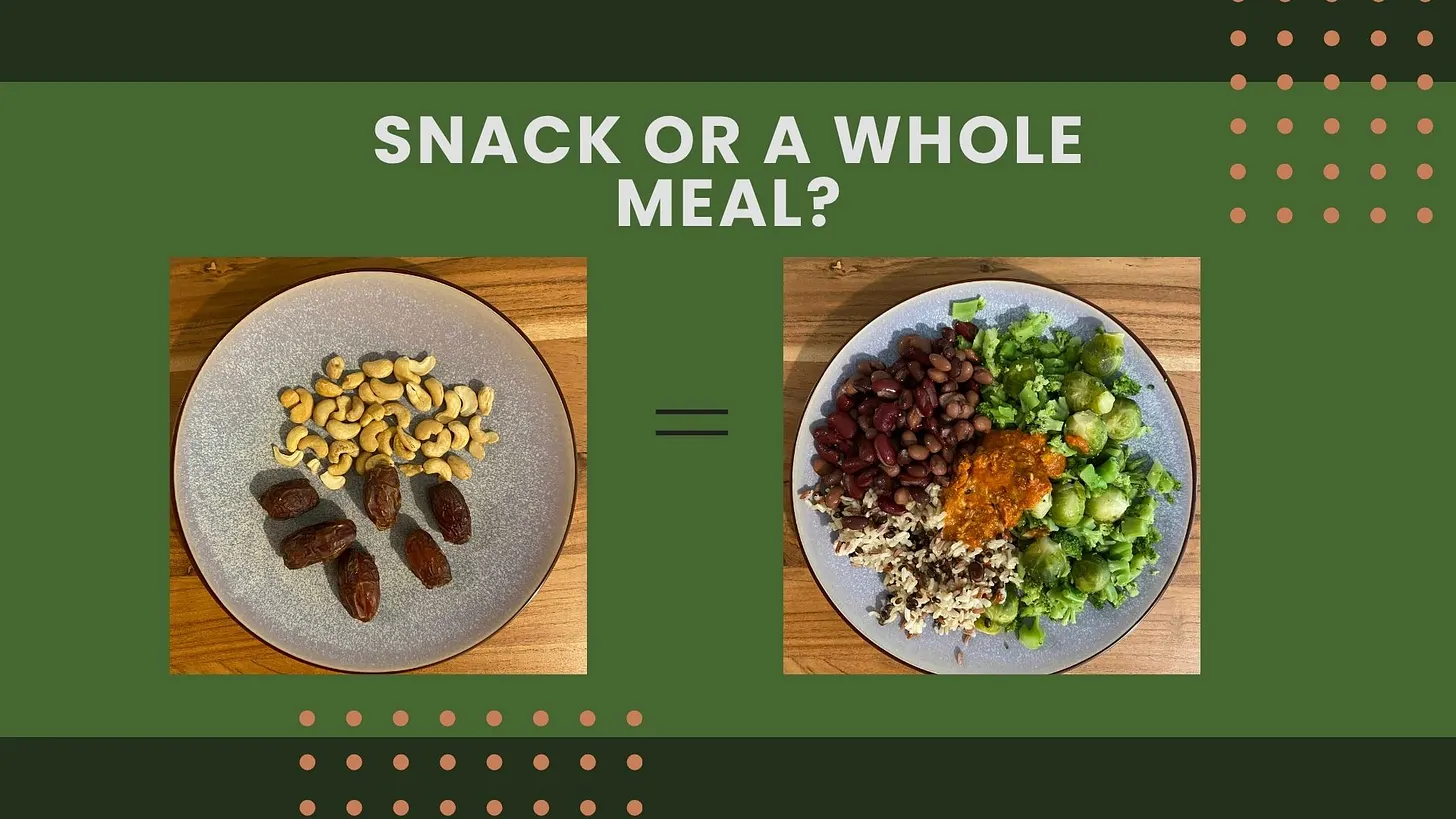
Nuts and seeds are nutritious but calorie-dense. A tablespoon or two on a meal is plenty.
Trap 2: Oil
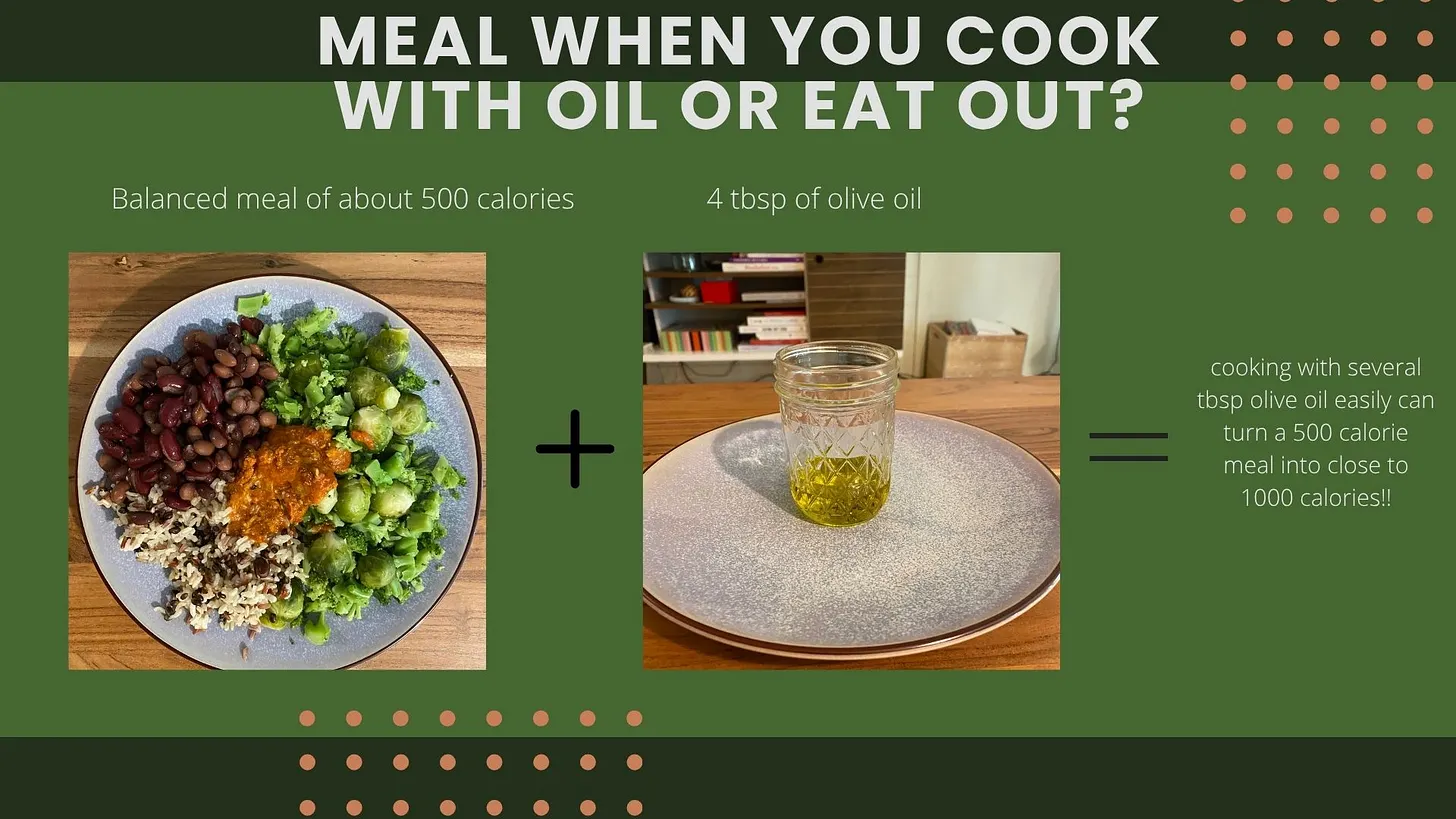
A plate of beans, rice, and vegetables is about 500 calories. Cook it in several tablespoons of oil — or order it at a restaurant where everything is cooked in oil — and you're closer to 1,000.
The snack illusion
Same volume of food, fewer calories
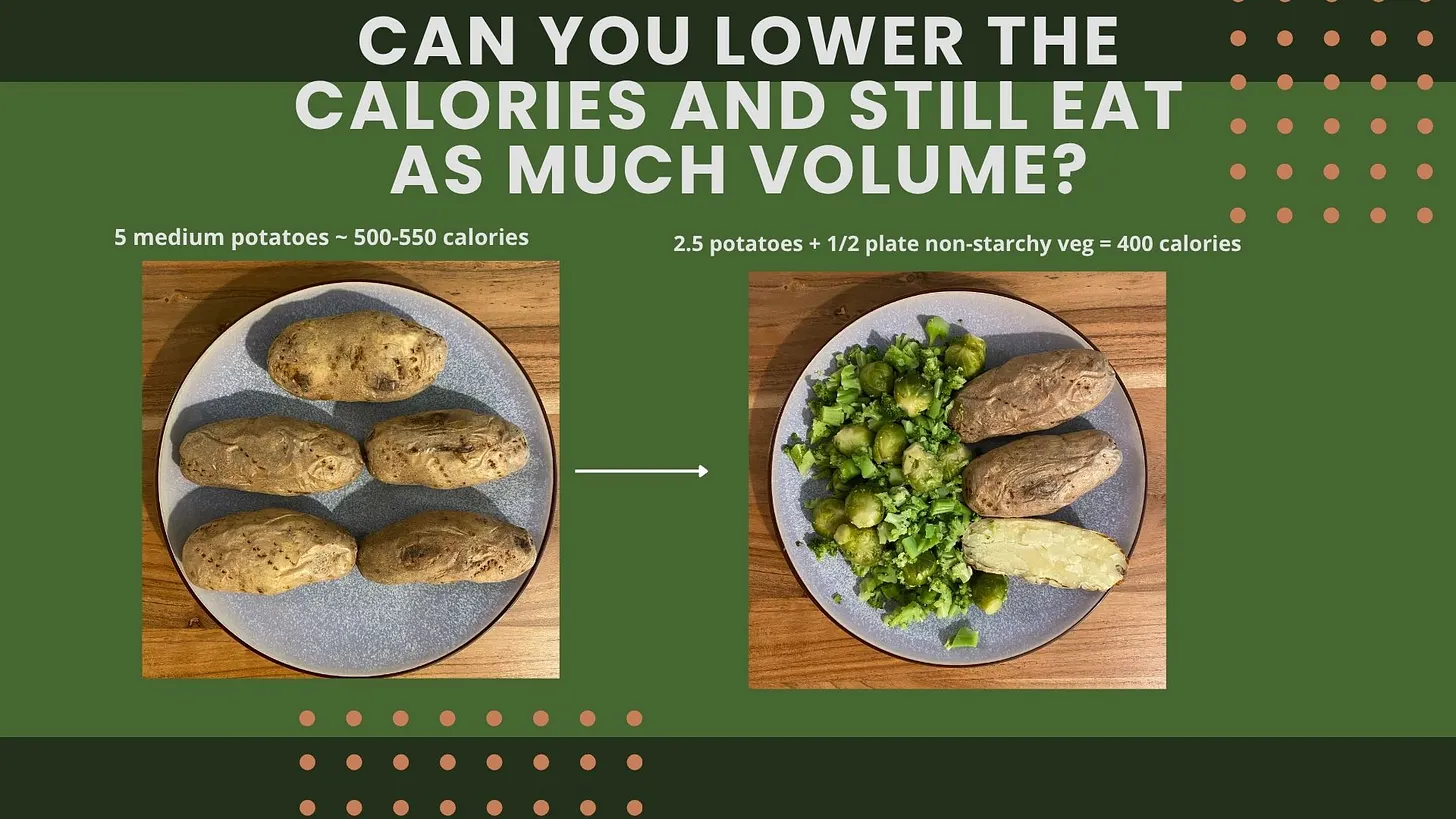
No calorie counting required.
The bottom line
Move away from the standard American diet, which is calorie-dense and leaves you feeling sick and sluggish. Lean into whole plant foods — fruits, vegetables, whole grains, beans, legumes, and small amounts of nuts and seeds.
Make these the predominant part of your diet, and there's no need to count calories.
Want help building the habit?
Coaching makes these ideas practical — weekly check-ins, real meals, and support that meets you where you are.
Book a visit with Deborah